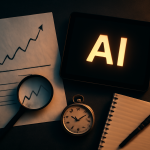

Picture this: It’s a Monday morning, and global currency markets are on edge. The Hungarian forint teeters against the dollar and euro, poised for a decisive move. In the background, AI-powered systems digest streams of financial data, searching for patterns that could hint at the week’s trajectory. Meanwhile, investors and policymakers watch intently, aware that the right prediction could spell opportunity—or risk.
The Digital Finance Frontier: Lessons from the Past, Tools for the Future
The world of finance is no stranger to rapid change. The 2008 financial crisis taught hard lessons about systemic risk, regulation, and the importance of transparency. Today, as digital banking platforms and technological ETFs gain traction, the sector faces a new set of opportunities and challenges. Venture capital is increasingly focused on startups developing AI-driven analytics and security solutions, hoping these innovations will provide a buffer against fraud and market volatility.

Recent currency fluctuations, such as those currently affecting the forint, reflect increased sensitivity to global economic shifts. Investors are seeking smarter ways to hedge risk and identify growth sectors. Here, digital finance tools—powered by AI—are proving indispensable for real-time analysis and scenario modeling.
AI’s Predictive Power: Hype and Reality
There’s excitement around AI’s potential to forecast future trends with over 90% accuracy, especially in volatile environments. Yet, the reality is more nuanced. While AI excels at processing vast datasets and uncovering subtle trends, its predictions are only as strong as the data and models it relies on. Crucially, AI can adapt faster than traditional methods, updating strategies in response to new developments—be it a sudden shift in currency rates or changes in regulatory policy. Still, human expertise remains irreplaceable for interpreting unprecedented events and integrating qualitative factors.
For instance, the rise of AI-driven wealth management platforms is transforming how individuals approach long-term investment. These tools can tailor portfolios to risk profiles and market conditions, but they also require careful monitoring to avoid systematic biases or unforeseen vulnerabilities. The integration of AI in the banking sector, meanwhile, enhances fraud detection and client onboarding but raises new questions around security and transparency.
From Crisis to Opportunity: Building Resilient Strategies
The move toward digital banking and investment isn’t just about convenience—it’s a response to evolving market risks and opportunities. The narrowing of speculative capital in real estate and the push for affordable housing options signal a shift in how financial institutions and governments are managing systemic vulnerabilities. Startups focused on fintech, AI-based compliance, and sustainable finance are at the forefront of this transformation, attracting fresh rounds of venture capital in a bid to future-proof the financial system.
At the same time, the unpredictable nature of economic growth, shaped by global events and policy decisions, underscores the need for flexible, robust investment strategies. Long-term investors are increasingly looking towards technological ETFs and AI-assisted tools to navigate uncertainty, hoping to capture growth while mitigating downside risks.
What’s Changed—and What Lies Ahead?
Compared to a decade ago, the digital finance ecosystem is more interconnected, data-driven, and responsive. AI’s role has expanded from experimental pilot projects to mission-critical infrastructure supporting everything from currency trading to startup financing. However, the lessons of past crises remind us that no system is infallible. Continuous oversight, ethical AI deployment, and collaborative approaches between technology and human judgment are essential for sustainable progress.
As the next wave of innovation unfolds, staying informed and adaptable is key. Investors, financial professionals, and regulators alike must blend advanced tools with critical thinking—ensuring that the promise of AI and digital finance translates into real, resilient growth for the years ahead.
Kapcsolódó cikkek